Sense
A State-of-Charge Monitor observes the thermal battery state and relevant building conditions.
Compact thermal battery designed for dense urban environments where chemical batteries are restricted.
By integrating thermal batteries directly into existing drop-ceilings, LATCHES™ offers a safe, fire-code compliant alternative where traditional chemical Battery Energy Storage Systems (BESS) are restricted or prohibited by urban fire codes.
A State-of-Charge Monitor observes the thermal battery state and relevant building conditions.
A predictive edge controller interprets demand, HVAC, and operating signals close to the equipment.
The controller commands active thermal battery cycles and the timed release of latent cooling energy.
Unlike chemical battery systems (BESS) restricted by dense urban fire codes, LATCHES™ utilizes Phase Change Materials that are non-toxic, safe for occupied indoor spaces, and scalable across commercial building portfolios. From UL 94 V-0 self-extinguishing PCM components to a fully UL 723 / ASTM E84 plenum-rated system, LATCHES delivers inherently fire-safe thermal storage right above your ceiling.
LATCHES™ delivers 102.5 BTU/ft² thermal storage unlocking 1–3 MWh peak capacity (~40 EV chargers), while maintaining indoor temperature setpoints four hours longer, providing substantial peak relief for the power grid.
*Based on laboratory test results.
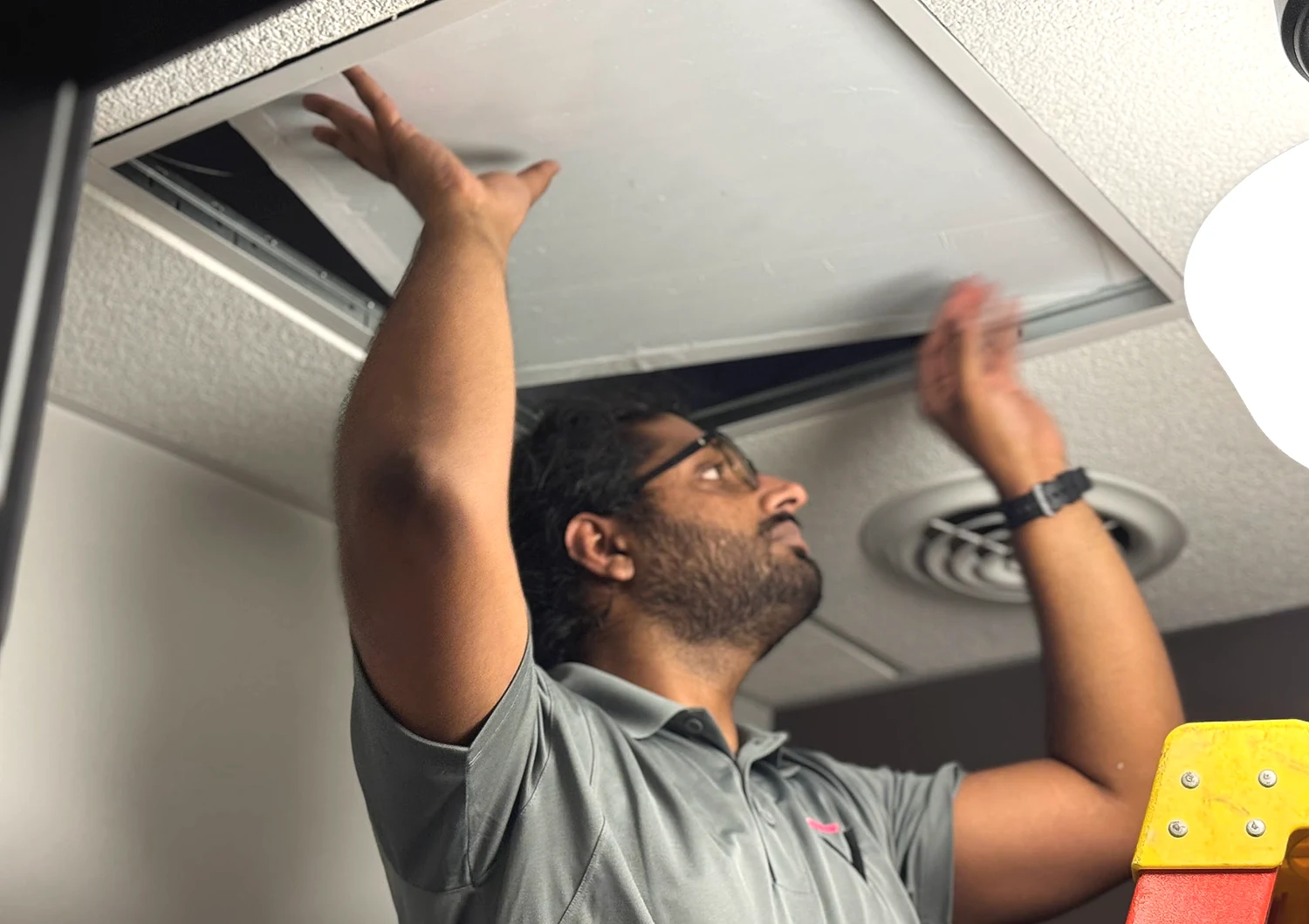
LATCHES™ is designed specifically for standard drop-ceiling integration, preserving 100% of rentable floor area while placing the thermal battery close to the conditioned space.
*Compared to conventional battery energy storage systems (BESS).
LATCHES™ integrates natively with Building Automation Systems (BAS) via BACnet protocols. Buildings can coordinate thermal charging and discharge with HVAC schedules, peak tariff periods, and utility demand-response signals.
Shift commercial HVAC compressor loads away from expensive peak-tariff periods to lower operational expenditure.
Use existing BAS signals to support municipal grid demand-response strategies and monetize load flexibility.
Office towers and corporate campuses balancing severe peak-demand utility charges with strict urban indoor fire safety codes.

Universities, schools, and institutional facilities striving to meet aggressive ESG and zero-emission mandates while maintaining acoustic comfort and classroom air quality.
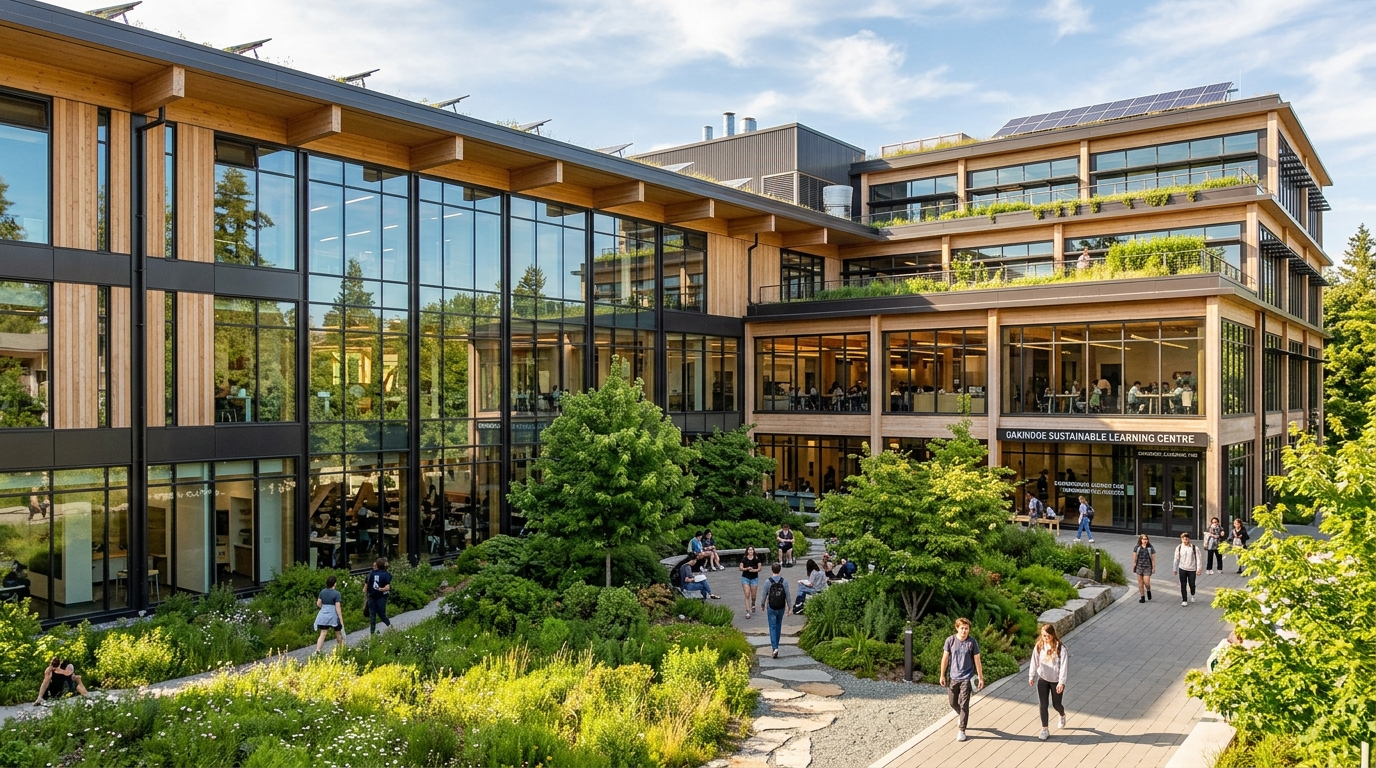
Clear criteria to evaluate your building’s electrical, ceiling, and network readiness for LATCHES™ zero-footprint thermal batteries.
Approximately 35% ceiling coverage in a 100,000 sq. ft. commercial facility unlocks up to 1 Megawatt-hour (MWh) of active thermal battery headroom—equivalent to a grid-scale battery pack—without surrendering any rentable floor area.
Yes. Lightweight LATCHES™ cassettes are engineered to distribute loads across standard commercial T-bar ceiling grids, verified against structural ratings and local codes during preliminary site review.
Building readiness is evaluated through drop-ceiling plenum accessibility, utility tariff structure (peak-to-off-peak cost ratio), existing BAS BACnet connectivity, and historical HVAC cooling load profiles.
LATCHES™ operates natively over BACnet MS/TP and BACnet/IP protocols, communicating directly with existing Building Automation Systems without requiring proprietary gateways or cloud lock-in.